Time to read : 14 minutes
Today I have the incredible privilege of talking with none other than the illustrious composer, Nathaniel Blume. With an impressive portfolio that has graced the most iconic shows and movies of our time, such as “The Flash”, “Arrow”, “The Nineties”, “Supergirl” among many others, his musical genius has undoubtedly left an indelible mark on the entertainment industry.
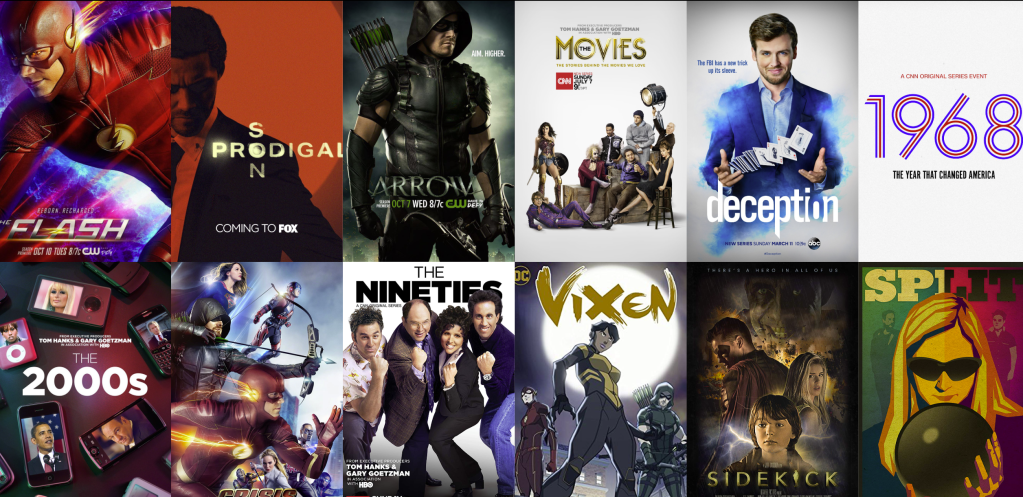
I can hardly contain my excitement for sharing this moment with such a distinguished artist. Nathaniel, thank you so much for granting me this opportunity to speak with you and gain insight into your exceptional career! Your musical genius has left an indelible mark on the entertainment industry, and I am eager to learn more about the creative process that drives your inspiring melodies. So, without any delay, let’s dive right into this extraordinary conversation with the maestro himself. Welcome, Nathaniel Blume!
1. First question, what sparked your passion for music? Was it a specific moment or a series of events that led you into the musical world?
I’d say it was a series of events. I picked up the trumpet in 6th grade and immediately had an affinity for making music. I wanted to take private lessons, I played Indiana state solo/ensemble, I was constantly looking for more opportunities to play. Before I knew it, I was listening to film scores and figuring out the trumpet parts in my bedroom. Once I was bitten by the film music bug, it became a lifelong obsession. I entered college on a “safer” path with a Chemistry and Trumpet Performance double major. However, I didn’t make it out of the first year before fully switching over to Composition with the intent to one day make a living writing for film.
2. Can I ask which was the first instrument that you learned to play? And has that instrument become the primary tool in your compositions?
I first learned the trumpet and it remains very dear to me. However, even I have to admit that it’s not going to be an appropriate instrument for everything I work on. I’m thrilled when projects like The Flash come along and occasionally allow me to use the trumpet in fantastical ways. But then I’ve been able to more subtly work it into other things I’ve done, like the end titles to Prodigal Son. You might not necessarily recognize the trumpet, but it’s there!
3. Continuing from our previous discussion, do you have a favorite instrument you love using in your compositions? If yes, what makes it special to you and how does it enhance the music you create?
Although I took a small amount of piano lessons growing up, I would absolutely never consider myself a pianist. That being said, it’s one of my favorite instruments because of its versatility. The piano obviously comes with a 7+ octave range which is nice, but it can also be overtly thematic or tucked within a supporting structure. It can be very sparse or it can be incredibly dense. There’s just so much there to work with, it’s an ideal companion to any type of ensemble.
4. Did you start as a musician who strictly followed the rules, or do you primarily rely on playing by ear and emotion?
This is a very interesting question. It may be a bit of a copout answer, but I’ll say both. I’m guessing you refer to classical rules of voice-leading and chord inversions and technical details you learn in school. And yes, it’s certainly important to know and recognize those aspects of music because they were strictly adhered to at one point in time for a reason. They’re effective. As music evolved over time, a lot of those rules still exist but they’re applied in very different ways. While I do come up with motives, melodies, and chord progressions by feel, they may eventually be refined by “rules” or in the very least by acquired knowledge of what works best for what I intend to convey.
5. As we venture further into your extraordinary career, I am genuinely fascinated by the pivotal moment that catapulted you into the realm of composing for major AAA movies and series. How did you navigate this remarkable journey, paving your way to such significant accomplishments in the industry? Your story undoubtedly holds inspiration for aspiring musicians and composers alike!
I wouldn’t say there was a “pivotal moment” at any point in my life. Everything seems to have happened one step at a time, and sometimes life has a way of making it all seem like it was intentional. In actuality, all I did was take Dory’s advice to “just keep swimming” and the hard work paid off. I’m still swimming today! Early on though, I took a route that is probably one of the most common for up-and-comers, and that is to start working for another composer. In my case it was Blake Neely. I started from the bottom, making coffee runs, answering phones, fixing studio components that stopped working, and much more. Gradually, I started to do more creative tasks like creating/curating sounds, orchestrating, and then finally writing. That’s where you can get experience in a safe environment and you eventually accrue enough credits to have a bonafide resumé. How do you get experience in an industry that will only hire you if you have experience? That’s one way.
6. What does your typical workday look like as a composer?
The easiest answer to this is that there is no typical workday. If all you had to do as a composer was write music, what a much more glorious occupation it would be. But in the industry you have to be a collaborator, a communicator, and often times a delegator. Some days are spent in communication with the filmmaker(s), figuring out what they want and how you’re going to accomplish that. It might be a phone call, a Zoom meeting, or even an in-person meeting. Some days you just need to plan out how you’re going to approach a particular project. If you have a team, you may have to take time to delegate tasks to your assistant, a contractor, an orchestrator, etc. There’s a lot to manage before and after you actually get to write the music! When I’m really in the thick of it, my favorite thing to do is to wake up reeeally early. I’m talking about a crazy number like 4am, for instance, where I sit down with a coffee and just start writing. I don’t open my email. No one else is awake, so there are no texts, no phone calls. It’s just me and as much music as I can write before the hustle and bustle of the day starts.
7. The experience of hearing your music resonate through the big screen or television must have been truly awe-inspiring! I’d love to hear how it felt when you witnessed your musical creations come to life in such a grand and impactful manner?
Obviously, that’s what composers live for. It’s a great feeling of accomplishment and self-pride. But since I have you, can I also give you the non-sugarcoated answer? This business is full of ups and downs, just like life. There are extreme highs when your music sits perfectly in the mix (or even a bit louder than you thought appropriate) and there are extreme lows when your music is mixed so quiet that you wonder why they even asked you to write something in the first place. Or you find out as the project is airing that the cue you wrote and rewrote 4 times was altogether dropped in favor of the temp that, in your opinion, doesn’t work well at all!!! In order to weather these emotions, you feel what you need to feel and then you move on. You’re always a collaborator and never solely responsible for anything. The awesome action music that hits in just the right ways is only effective when the direction, the acting, the editing, and everything else is also working. And likewise, when a decision was made that you’re not fully on board with, it was out of your hands. You grow thick skin and move on to the next thing.
8. For many composers, having their music played by an orchestra is a dream come true. Can you tell us about your experience on stage, conducting the orchestra, and witnessing your compositions come to life in such a remarkable way?
Every time I get to record a score with live musicians, I always tell everyone that “this is what we live for”. There’s so much that can be done with a keyboard and a computer, but nothing replaces the quality and the expression that comes from that extra human touch. And after sitting in a room by yourself for hours on end creating the music, it’s so satisfying to finally bring it to the musicians and make music that takes the project to the next level.
9. When you were working on THE FLASH soundtracks alongside Blake Neely, could you give us a glimpse of what a typical workday looked like for both of you? How did you collaborate and coordinate your efforts to bring the musical magic to life for this iconic series?
Blake and I would divvy up the workload before starting each episode and then chip away at it cue by cue, week to week, season to season for 9 years! The beauty of that collaboration is that not only did we start writing together from the pilot, but we already had a history of writing together on numerous other projects. So everything felt incredibly seamless in terms of our musical approach. We established themes early on, but then of course they all evolve over the course of the show as new themes emerge. We were always listening and giving each other feedback, and building off of each other’s material constantly. Because of that, hopefully, the music of the show feels like it’s changing and evolving right alongside Barry and the team.
10. During your work on numerous famous projects, have you had the opportunity to meet some of the celebrities associated with those projects?
I have met many celebrities and even better, I’ve been able to work directly with some of them too! For instance, on Prodigal Son, Dermot Mulroney played one of the villains at the end of season 1. He also happens to play cello IRL. Naturally, it made sense to place his villain theme on the cello and record him playing it! He was so gracious to take that on in addition to his acting duties and it turned out to be a lot of fun.
11. Given that many of your projects lean towards sci-fi themes, would you consider yourself a big sci-fi fan? Has your passion for science fiction influenced your approach to composing for these projects in any way?
I would absolutely consider myself a sci-fi fan. From the obvious fascination with Star Wars that so many other people have, to perhaps the not-so-obvious but insatiable X-Files obsession I had during my teen years, I love it all. I don’t know if my passion for sci-fi has necessarily influenced my approach to composing for those projects any more than anything else. In the end, everything is about the story. The genre of any given project of course paints it in a certain light, but ultimately the music needs to help tell the story. It needs to highlight the characters’ journeys and emotions. So in that sense, all accumulated knowledge and experience from all genres informs those approaches.
12. What kind of music do you usually love to listen and does it differ from the music you compose?
Well this is a very tough question to answer and it’s not so straightforward. I can’t possibly stick to any particular kind of music. I love listening to pop music, especially of my childhood. Everything from Aerosmith to Metallica to Britney Spears. My all-time favorite band is Radiohead. And I listen to film scores from all decades, mostly from the 60’s onward. And yes, this is all stuff that I still listen to. In terms of concert music, it’s all over the map. I won’t even begin to list the composers living and dead that I listen to regularly. However, I will say that Sibelius’ Symphony 2 is my “centering” piece of music and has been for many years. For instance, if I’m traveling and I’m feeling really anxious or on edge, I put on my recoding of Esa-Pekka with the LA Philharmonic and all of a sudden I feel calm again. I listen to new stuff in the pop and film worlds too, of course. And ALL of it informs the music I write. Even Britney.
13. Who are the top 3 composers that have been influential in your life? And why them?
Michael Schelle, Leonardo Balada, and Blake Neely. All three of them have been my teachers, my mentors, and my friends. I would not be where I am professionally or personally without each of them, and my musical voice would likely be altered dramatically if you took even one of them away.
14. If you could travel back in time and give your past self only one sentence of advice, what would it be?
Another fantastic question. The hardest piece of advice to take and to truly understand is to “just be in the moment”. Since having my first kid almost 7 years ago, this has been something that I’m more and more conscious of, and I think it will continue to be a goal for the rest of my life. Things happen so fast, and truly amazing moments are so fleeting, but if you can live in it for however long it lasts and really appreciate it, then that’s what life is all about. You’re never going to have that same show or same movie again. You’ll never have that same team of filmmakers again. It may be similar but it will never be exactly the same. Especially when you’re really busy and you feel stressed out, it’s hard to appreciate those moments for what they are.
15. Do you find yourself over-analyzing a song instead of simply enjoying it? If so, does this happen frequently?
I don’t really over-analyze songs if I’m being honest. What happens to me (far more often than it should) is if I see a score for a movie or show that doesn’t particularly land well in my opinion, then I think about all the ways I would have done it better. Don’t get me wrong, there are plenty of scores I listen to and think “wow, they’re nailing this, I love it!”. And by they, I mean the composer and the filmmakers because it is a collaboration, always. But when I see a score that doesn’t seem to jive with the drama on screen as well as I think it should, then my mind just starts churning out all the things I would want to do.
16. Is there a dream project, movie, or show that you’ve always wanted to be a part of, and what makes it so captivating for you as a composer?
An animated feature or long-form series. Hands down. I love the stories that can be told with animation. They can be so rich and so imaginative, and the playground it sets up for a composer is extremely appealing. I’ve done an animated series in short-form, but something that’s bigger and allows me to spread my musical wings a little more would be a dream.
17. And for the last question, what do you envision as your next steps in your career as a composer? Looking ahead, where do you hope to see yourself in five years, and what specific goals or achievements would you like to have accomplished by then?
If I’m to summarize some of my answers so far, I’m going to “just keep swimming” and “be in the moment” for as long as the industry keeps hiring me. I feel like every project I do, I’ve proven that I can come to the table with some of the predictability that filmmakers want, while also sprinkling in some of the unpredictable, extra-mile touches that make everyone happy and proud. If I can keep doing that, then I’ll feel like I’m still growing as a composer and a collaborator. And that’s enough of an accomplishment for me.
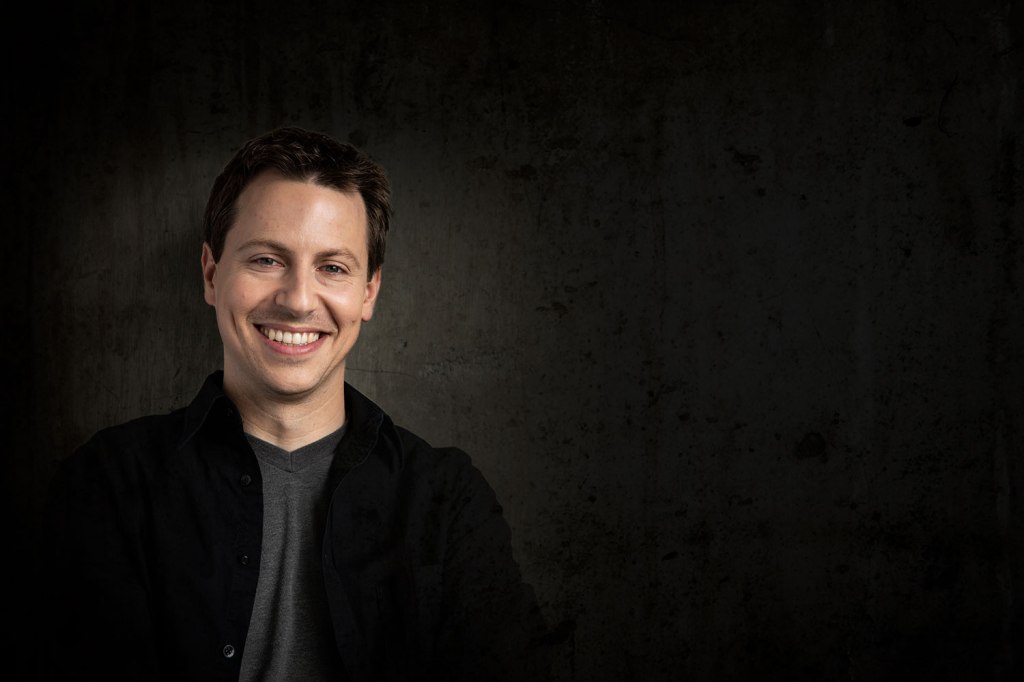
Once again, thank you, Nathaniel, and thank you all for reading this amazing interview with us today. Stay curious, stay inspired, and keep exploring the worlds of knowledge and creativity that Nathaniel has so brilliantly illuminated for us. Also, don’t forget to check out more of his work in the links below! Until next time!
 Alan Špiljak